
Table of Contents
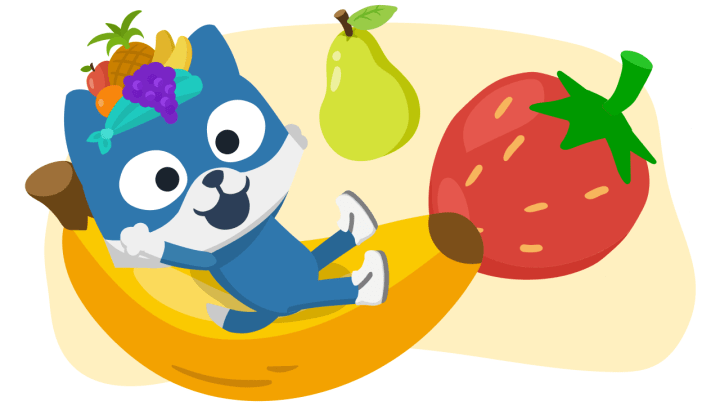
Fruits are nature’s candy! They’re colorful, sweet, and bursting with flavors that excite our taste buds and nourish our bodies. They come in all shapes and sizes, from tiny berries to giant watermelons, each offering a unique combination of vitamins and minerals that keep us healthy and strong.
Learning about different fruits not only expands children’s vocabulary but also encourages them to explore and enjoy a variety of healthy foods. Understanding the names, tastes, and textures of fruits helps kids make healthy choices and appreciate the natural world.
Let’s take a flavorful journey through the English fruit market to explore the vibrant world of fruits!
Names of fruits in English
Learning about fruits introduces us to a variety of words that describe tastes, colors, and feelings associated with these natural treats. The following words are featured in Studycat’s Learn English for kids app, where kids learn English through repetition, accent practice, and most importantly, fun!
Here’s a basketful of fruity vocabulary to enjoy:
 apple
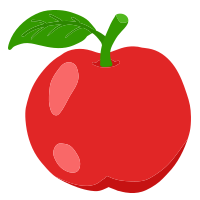
apple
A round fruit with red, yellow, or green skin and crisp flesh.
“She packed an apple for her snack at school.”
 orange
A citrus fruit with a tough bright orange skin.
“He squeezed an orange to make fresh juice for breakfast.”
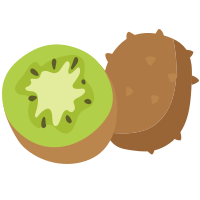 kiwifruit
A small fruit with green flesh, black seeds, and a fuzzy brown skin.
“Kiwifruit is rich in vitamin C and tastes sweet with a hint of tartness.”
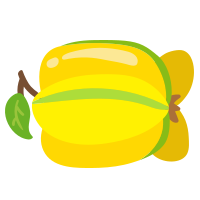 starfruit
A tropical fruit with five ridges, yellow when ripe, and has a waxy skin.
“Starfruit looks like a star when sliced, making it a fun addition to fruit salads.”
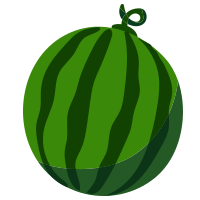 watermelon
A large, round or oval fruit with a hard green rind and sweet, juicy, red or pink flesh.
“Watermelon is perfect for picnics on hot summer days.”
 banana
A long curved fruit with a yellow skin and soft, sweet, white flesh inside.
“She eats a banana every morning for a quick energy boost.”
 lemon
lemon
A bright yellow, sour citrus fruit.
“A slice of lemon in water makes a refreshing drink.”
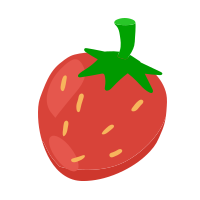 strawberry
A sweet, red, heart-shaped fruit with tiny seeds on its surface.
“Strawberry fields become ripe and red in early summer.”
 pineapple
A tropical fruit with rough, spiky skin, sweet yellow flesh, and a tough, leafy crown.
“Pineapple adds a tropical twist to smoothies and desserts.”
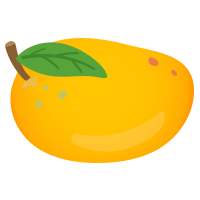 mango
mango
A tropical fruit with smooth skin, sweet juicy flesh, and a hard pit inside.
“Mango is deliciously sweet and often used in salsas and smoothies.”
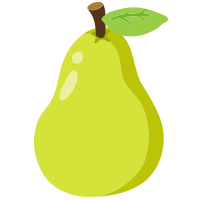 pear
pear
A sweet fruit with a rounded base, tapering towards the stalk.
“Pears are soft and sweet when fully ripe.”
Citrus fruits names in English
Citrus fruits are known for their bright colors and refreshing, tangy flavors. They are packed with vitamin C, making them a healthy choice for boosting the immune system.
orange
A citrus fruit with a tough, bright orange skin and juicy, sweet-tart flesh.
“He peeled an orange for a quick snack after playing outside.”
lemon
A bright yellow, sour citrus fruit often used in drinks and as a flavor enhancer.
“She added a slice of lemon to her tea for extra zing.”
lime
A small, green citrus fruit with a sharp, tangy flavor.
“Lime juice adds a refreshing taste to salads and drinks.”
grapefruit
A large, round citrus fruit with a thick skin, often pink or red inside, and a tart flavor.
“He starts his day with half a grapefruit for breakfast.”
tangerine
A small, sweet citrus fruit with a loose, easy-to-peel skin, similar to an orange.
“Tangerines are perfect for snacking on the go.”
pomelo
A large citrus fruit with a thick rind and sweet, mildly tangy flesh, similar to a grapefruit but sweeter.
“Pomelo is a refreshing treat, especially in tropical climates.”
mandarin
A type of small, sweet citrus fruit with a thin, loose skin, often eaten as a snack.
“She loves mandarins because they’re easy to peel and sweet.”
Names of different berries in English
Berries are small, juicy fruits that are often eaten fresh, added to desserts, or blended into smoothies. They are rich in antioxidants and packed with vitamins.
strawberry
A sweet, red, heart-shaped fruit with tiny seeds on its surface.
“Strawberries are a favorite in fruit salads and desserts.”
blueberry
A small, round fruit with deep blue skin and sweet-tart flesh.
“She sprinkled blueberries on her yogurt for breakfast.”
raspberry
A delicate, red or black berry made up of many tiny juicy segments.
“Raspberries add a burst of flavor to cereal and smoothies.”
blackberry
A dark purple or black fruit made up of small, juicy drupelets.
“Blackberries are perfect for making jam or adding to pies.”
cranberry
A small, tart, red fruit often used in sauces, juices, and desserts.
“Cranberries are a holiday staple, especially in sauces and baked goods.”
gooseberry
A small, round fruit that can be green, red, or yellow, with a tart flavor.
“Gooseberries are often used in pies and preserves.”
currant
A small, tart berry that comes in red, black, or white varieties, often used in baking.
“Currants are a key ingredient in fruitcakes and scones.”
boysenberry
A hybrid berry that is a cross between a raspberry, blackberry, and loganberry, with a sweet-tart flavor.
“Boysenberries are delicious in jams and pies.”
Tropical fruit names in English
Tropical fruits thrive in warm climates and are known for their vibrant colors and exotic flavors. These fruits bring a taste of the tropics to our tables and are often enjoyed fresh or in desserts.
mango
A tropical fruit with smooth skin, sweet, juicy flesh, and a large, flat seed inside.
“Mango is a tropical treat that’s perfect in smoothies and salsas.”
pineapple
A tropical fruit with rough, spiky skin, sweet yellow flesh, and a tough, leafy crown.
“Pineapple adds a burst of sweetness to fruit salads.”
papaya
A large, oval-shaped tropical fruit with orange flesh and black seeds in the center.
“Papaya is delicious when chilled and served with a squeeze of lime.”
coconut
A large, brown, hard-shelled fruit with white flesh and coconut water inside.
“Coconut is used in many tropical dishes and drinks.”
passion fruit
A small, round fruit with a thick rind and sweet-tart, seedy pulp inside.
“Passion fruit is often used in desserts and drinks for its intense flavor.”
guava
A tropical fruit with green or yellow skin, pink or white flesh, and tiny seeds.
“Guava is sweet and fragrant, making it perfect for juices and jams.”
lychee
A small, round fruit with a rough, red skin, sweet white flesh, and a single seed inside.
“Lychee is a juicy, fragrant fruit that’s often enjoyed fresh.”
durian
A large, spiky tropical fruit known for its strong smell and creamy, rich flesh.
“Durian is a divisive fruit—some love its unique flavor, while others find its smell overwhelming.”
Names of stone fruits in English
Stone fruits are named for the large, hard pit or “stone” found inside. These fruits are typically juicy and sweet, making them a favorite in summer desserts and snacks.
peach
A soft, fuzzy fruit with sweet, juicy flesh and a large pit inside.
“Peaches are a summertime favorite, perfect for pies and cobblers.”
cherry
A small, round fruit with a sweet or tart flavor and a pit in the center.
“Cherries are delicious eaten fresh or used in desserts.”
plum
A smooth-skinned fruit with juicy flesh and a single stone in the middle.
“Plums are sweet and juicy, ideal for snacking or making jam.”
apricot
A small, orange fruit with soft flesh and a slightly tart flavor.
“Apricots are often dried or used in jams and pastries.”
nectarine
A smooth-skinned variety of peach with sweet, firm flesh.
“Nectarines are perfect for eating fresh or grilling.”
avocado
A creamy fruit with green skin and a large pit, often used in savory dishes.
“Avocados are the main ingredient in guacamole.”
date
A sweet, chewy fruit from the date palm, often eaten dried.
“Dates are a natural sweetener in many Middle Eastern dishes.”
olive
A small fruit with a pit, typically used to produce olive oil or eaten as a savory snack.
“Olives are a staple in Mediterranean cuisine.”
persimmon
A round, orange fruit with a sweet, honey-like flavor when ripe.
“Persimmons are delicious when fully ripe and soft.”
Exploring these fruits not only expands our vocabulary but also our taste buds, as we learn about the diversity of flavors nature has to offer. Studycat’s characters invite us to taste, learn, and enjoy the delicious world of fruits!
How to learn and remember fruits words
Learning about fruits with Studycat makes vocabulary lessons as refreshing as a fruit salad on a summer day. Here are some engaging activities to help remember these fruity words:
- Fruit tasting party: Host a tasting party with a variety of fruits from the list, discussing each one as you taste it.
- Draw and label: Draw pictures of each fruit and label them with their English names. It’s a fun way to reinforce learning.
- Fruit memory game: Create a memory matching game with cards featuring pictures of fruits and their names.
- Cooking with fruit: Prepare simple recipes using fruits from the vocabulary list, talking about the fruits as you cook.
- Fruit story time: Write or tell stories that include the different fruits, using their names and describing their flavors and colors.
As we wrap up our fruity journey, remember that every bite is an opportunity to savor new words and flavors. With Studycat’s playful approach, learning about fruits becomes an exciting exploration of the senses.
Until our next delicious adventure, keep enjoying the sweet and juicy world of fruits!


