

Table of Contents
Hobbies are more than just pastimes—they’re a way for children to explore their interests, develop new skills, and express their creativity.
Engaging in hobbies helps kids build confidence, find joy in everyday activities, and connect with others who share their passions. Whether it’s playing an instrument, painting a masterpiece, or collecting treasures, hobbies play a crucial role in a child’s growth and happiness.
As children discover what they love to do in their free time, they learn valuable lessons about patience, perseverance, and self-expression. These activities can turn into lifelong passions that enrich their lives in countless ways.
Let’s explore some popular hobbies and how they enrich our lives!
Names of hobbies in English
Hobbies offer us a chance to unwind, learn new skills, and connect with others who share our interests. The first list are words for hobbies in English used in Studycat’s Learn English for kids app, where we incorporate tons of fun, repetition, all in a giant adventure where millions of kids around the world love playing!
Here’s a look at some enjoyable hobbies to inspire your leisure time:
 take photos
Capturing images or moments with a camera for pleasure or art.
“She loves to take photos of nature and animals on her hikes.”
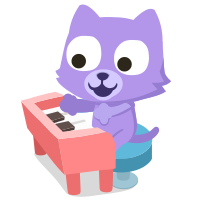 play the piano
Creating music by pressing the keys on a piano.
“He plays the piano every evening, filling the house with beautiful melodies.”
 watch movies
Viewing films as a form of entertainment or study.
“They watch movies together on weekends as a family tradition.”
 sing songs
Performing music with one’s voice.
“She loves to sing songs in the shower or when she’s alone in her room.”
 draw pictures
Creating images or scenes on paper or other surfaces using pencils, pens, or other drawing tools.
“He draws pictures of his favorite cartoon characters with great skill.”
 listen to music
Enjoying musical sounds, either recorded or live.
“I listen to music while I work; it helps me concentrate and feel relaxed.”
Creative hobbies names in English
Creative hobbies allow us to express ourselves through art, craft, and imagination. These activities help develop fine motor skills, encourage out-of-the-box thinking, and bring joy through the act of creation.
painting
Creating artwork by applying paint to a surface such as canvas, paper, or wood.
“She spends hours painting landscapes full of vibrant colors.”
crafting
Making handmade items using various materials, often as a form of art or decoration.
“He enjoys crafting model airplanes from kits.”
knitting
Using yarn and needles to create fabric by interlocking loops.
“She knitted a warm scarf for winter.”
scrapbooking
Creating personalized photo albums by adding pictures, notes, and decorations to a scrapbook.
“They made a beautiful scrapbook filled with family memories.”
sculpting
Shaping materials like clay or stone into three-dimensional art.
“He sculpted a small statue out of clay.”
origami
The Japanese art of folding paper into decorative shapes and figures.
“She loves making origami cranes and flowers.”
jewelry making
Creating custom jewelry pieces using beads, metals, and other materials.
“She makes her own necklaces and bracelets as a hobby.”
sewing
Using a needle and thread to create or repair clothing and other fabric items.
“He learned sewing to make costumes for school plays.”
pottery
Shaping clay on a potter’s wheel to create bowls, vases, and other items.
“She takes pottery classes to make her own dishes.”
Outdoor hobby names in English
Outdoor hobbies connect us with nature and encourage physical activity. These activities are great for health, exploration, and experiencing the beauty of the natural world.
hiking
Walking long distances in nature, often on trails or in the mountains.
“They go hiking every weekend to enjoy the fresh air and beautiful views.”
camping
Staying outdoors overnight in a tent or a camper, often in a forest or park.
“The family loves camping by the lake during summer vacations.”
fishing
Catching fish from rivers, lakes, or the ocean, usually with a rod and bait.
“He spends peaceful mornings fishing by the river.”
birdwatching
Observing and identifying different species of birds in their natural habitats.
“Birdwatching is her favorite way to connect with nature.”
gardening
Growing plants, flowers, or vegetables in a garden.
“He takes pride in gardening, especially when the flowers bloom.”
cycling
Riding a bicycle for exercise, transportation, or leisure.
“Cycling through the countryside is a relaxing hobby.”
picnicking
Having a meal outdoors, usually in a park or natural setting.
“They enjoy picnicking in the park on sunny days.”
stargazing
Observing the stars and planets in the night sky, often using a telescope.
“They go stargazing to learn about constellations.”
rock climbing
Climbing up natural rock formations or artificial rock walls, often as a sport.
“Rock climbing is an exciting and challenging outdoor hobby.”
Performing arts hobby names in English
Performing arts hobbies involve expressing oneself through music, dance, and drama. These activities help build confidence, improve communication skills, and foster a love for the arts.
dancing
Moving rhythmically to music, often as a form of expression or performance.
“She takes dance classes to learn ballet and jazz.”
acting
Performing in plays, movies, or TV shows by portraying characters.
“He loves acting in school theater productions.”
playing guitar
Creating music by strumming or plucking the strings of a guitar.
“He plays guitar in a band with his friends.”
playing drums
Creating rhythm by striking drums with sticks or hands.
“She practices playing the drums every day.”
playing violin
Playing music on a string instrument with a bow.
“He’s learning to play the violin for the school orchestra.”
writing poetry
Creating poems that express emotions, ideas, or stories through written words.
“She enjoys writing poetry in her free time.”
singing in a choir
Performing music with a group of singers, often in harmony.
“He sings in the school choir and loves performing at concerts.”
puppetry
Performing with puppets, often in a theater setting to tell stories.
“Puppetry allows her to bring characters to life on stage.”
magic tricks
Performing tricks that seem to defy logic, often to entertain and amaze others.
“He practices magic tricks to perform at parties and events.”
Collecting hobbies in English
Collecting hobbies involve gathering and organizing items of interest. These activities teach patience, attention to detail, and the joy of finding rare or unique objects.
collect stamps
Gathering postage stamps from different countries and time periods.
“He has a collection of stamps from around the world.”
collect coins
Gathering coins, often from different countries or historical periods.
“She collects coins and learns about their history.”
collect postcards
Gathering postcards, often from different places or with interesting images.
“He collects postcards from every place he visits.”
collect toys
Gathering toys, especially those that are vintage or rare.
“She has a large collection of vintage toy cars.”
collect action figures
Gathering figurines of characters from movies, comics, or video games.
“He collects action figures of his favorite superheroes.”
collect seashells
Gathering seashells from beaches, often sorted by type or color.
“She loves collecting seashells during beach vacations.”
collect stickers
Gathering stickers, often in a themed album or scrapbook.
“His sticker collection features characters from his favorite TV shows.”
collect trading cards
Gathering cards used in games or featuring sports figures, often traded with friends.
“He collects trading cards and swaps them with classmates.”
collect comic books
Gathering comic books, often featuring favorite superheroes or stories.
“She has a collection of classic comic books in perfect condition.”
Exploring hobbies not only enhances our free time but also develops our creativity, emotional well-being, and social connections. Studycat’s friendly characters encourage us to try new activities and discover what brings us joy and fulfillment.
How to learn and remember hobbies words
Incorporating hobbies into our learning journey with Studycat turns vocabulary into an experience of joy and personal growth. Here are some engaging ways to practice these new words:
- Create a hobby journal: Document your experiences trying different hobbies, using the vocabulary words to describe what you did, saw, and felt.
- Hobby share day: Organize a day where friends or family members share their hobbies with each other, explaining what they do and why they enjoy it.
- Make a hobby collage: Cut out pictures from magazines or print images that represent different hobbies and label them with the corresponding words.
- Hobby matching game: Play a game where you match hobby words with pictures or descriptions of the activities.
- Explore hobbies together: Pick a new hobby from the list to try out as a group or family, discussing what you learned and liked about the experience.
As we put down our pencils, cameras, and remote controls, remember that hobbies are the threads that weave the tapestry of our lives with color, texture, and vibrancy. With Studycat’s imaginative approach, learning about hobbies becomes an exciting adventure that mirrors the joy of exploring our interests and passions.
Until our next delightful discovery, keep exploring new hobbies and the words that bring them to life!


